
Stretching for Runners: Before, After, and Every Day
Dynamic moves before a run, static holds after, and four simple everyday stretches with instructions instead of mystery photos.
Updated July 12, 2026: Merged with our old "4 Everyday Stretches" post, which had photos but no instructions. Now it has both. Also softened the injury claims to match the evidence.

You will never see the runner you follow on social media post their stretching routine. You'll see the glam shot at the end of a run. You'll see the "I run so I can eat all the donuts" post. The ten minutes of leg swings in the driveway stay off camera.
Stretching is not exciting. It's still worth your time.
What stretching does (and what it doesn't)
Stretching helps you keep an adequate range of motion in your joints and keeps muscles from feeling like old rope. Runners tend to notice looser hips, calves that complain less, and a warm-up that puts them in the right headspace before hard work.
One honest note before we go on. You'll hear that skipping stretching causes injuries. The evidence on that is mixed. Some studies find stretching reduces injury risk, others find no effect. What's better supported is that a proper warm-up helps, mobility work keeps you moving well, and sudden jumps in training load are the thing most likely to hurt you. So stretch because it feels good and keeps you moving well, not because it's a magic force field. And if something hurts beyond normal tightness, that's a question for a doctor or physical therapist, not a hamstring stretch. Knee complaints in particular are worth reading up on. Start with our runner's knee guide.
Before you run: dynamic
Before a run, skip the long holds. Cold muscles don't love being yanked. Do movements instead:
- Butt kicks. Jog in place, heels flicking up toward your glutes. 20 to 30 seconds.
- High knees. Same idea, knees driving up to hip height. 20 to 30 seconds.
- Leg swings. Hold a wall, swing one leg forward and back 10 times, then side to side 10 times. Switch legs.
- A light jog. Three to five easy minutes before you settle into pace.
After you run: static
Once you're warm, longer holds make sense. Hold each 20 to 30 seconds, no bouncing:
- Lying hamstring stretch (a strap or towel around the foot helps)
- Groin stretch
- Calf stretch against a wall
- Hip flexor lunge stretch
- Lying spinal twist
Short on time? Calves and hamstrings first. They do the most complaining.
Four everyday stretches
These four are basic and often skipped. They take five minutes, need no equipment, and work on rest days too. Hold each for 20 to 30 seconds per side, stay relaxed, and stop short of pain.
1. Standing hamstring stretch
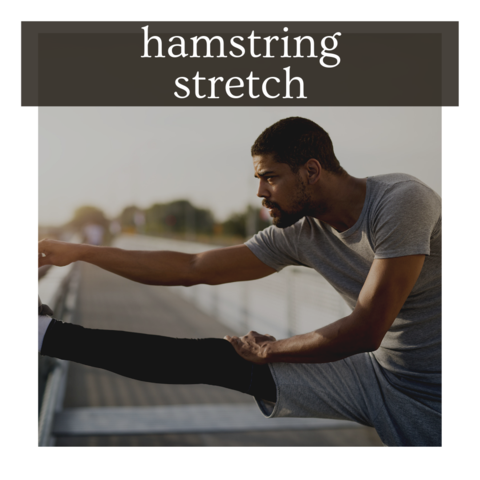
Prop one heel on a bench, step, or railing around knee height. Keep the raised leg straight and your back long, then hinge forward from the hips until you feel the pull down the back of the thigh. Reach toward the foot if you can do it without rounding into a question mark.
2. Triceps stretch
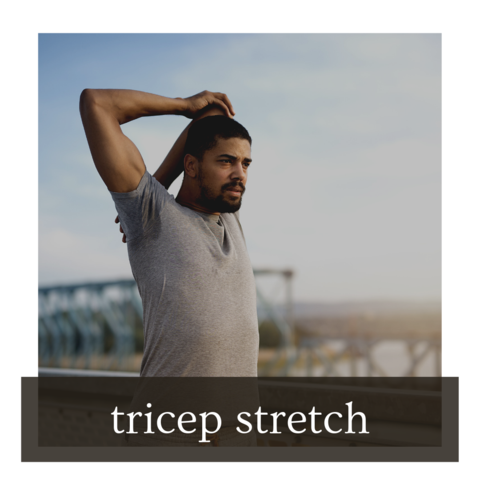
Reach one arm overhead, bend the elbow so your hand drops behind your neck, then use the other hand to gently press the bent elbow down and back. Your arms carry more of your run than you think.
3. Quadriceps stretch
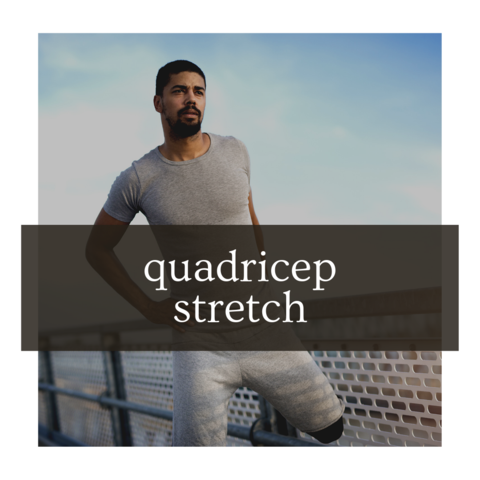
Stand tall, grab one ankle behind you, and pull the heel toward your glutes. Keep your knees close together and stand upright rather than tipping forward. Hold something if balance is a work in progress. No shame.
4. Arm and shoulder stretch

Bring one straight arm across your chest and use the opposite forearm to hug it in until you feel the stretch across the back of the shoulder. Keep the shoulder down, away from your ear.
Make it boring and regular
A few minutes of dynamic work before, a few static holds after, and the four stretches above on most days. That's the whole routine. It won't get likes. It will keep you comfortable enough to run tomorrow, which is the entire point.
More from the Lab
Keep reading

Training
How to Set a Realistic Race Goal Time (Without Guessing)
Use a recent performance as your anchor, then check it against your training, the race distance, and the course. Calculators are a starting point, not a promise.
Read article
Training
Missed a Week of Running? What to Do With Your Training Plan
Do not cram missed miles into the next few days. Resume from the fitness and recovery you have now, then rebuild the plan around reality.
Read article