
Race Day: Advice That Holds Up
Hydration that matches your race distance, a warm-up that works, pacing that doesn't blow up at mile two, and the truth about the finish-line beer.
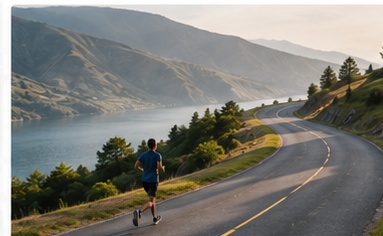
You signed up for a race. Congratulations. You've trained, or you're about to, and at some point soon you'll be standing in a corral wondering why you paid money for this.
Here's the advice that holds up, from one runner to another. For anything medical, your doctor outranks us.
Hydration depends on the distance
This is where most race-day advice goes wrong, including an early draft of this very post, so let's do it properly.
Every race: start hydrated. Drink normally the day before, then roughly 16 ounces of fluid an hour or two before the start. That gives your body time to absorb it and you time to visit the porta-potty while the line is still civilized.
Short races, under about an hour (most 5ks and 10ks): if you started hydrated, you don't need much during the race itself. Interesting quirk: studies have found that in short hard efforts, just swishing a carbohydrate drink in your mouth and spitting it out can boost performance. Your brain tastes fuel and lets you push harder. That finding applies to short races. It is not a plan for a marathon.
Longer efforts, over about an hour (half marathons, marathons, hot 10ks): drink during the race. This is where "hydrate before, not during" gets people into trouble. Take fluid at aid stations, guided by thirst, and use a sports drink over plain water once you're out there long enough to be sweating out salt as well as water. Both extremes hurt you: too little and you fade or worse, and drinking far beyond thirst carries its own serious risks. If your mouth feels like a desert, drink. If you're forcing down cups you don't want, stop.
Practice all of it in training. Race day is a terrible time to discover your stomach's opinions.
Eat something small
An apple, a banana, half a peanut butter sandwich, an hour or two out. Nothing new, nothing heroic. Your race breakfast should be so familiar it's boring.
Warm up, including the loose bits
A brisk 3 to 5 minute walk or easy jog before the start, plus a few dynamic moves: leg swings, high knees, butt kicks. Your knees are supported by everything upstream of them, glutes and thighs included, and they appreciate not being launched from zero.
Save long static stretching for after. Cold muscles prefer movement.
Pace like you've met yourself before
The start-line surge is a trap. Everyone sprints off the line, and everyone you pass at mile one passes you back at mile three, looking comfortable.
Settle into your comfortable base pace early, hold it, and speed up gradually in the back half if you feel good. Save the all-out sprint for the final few minutes. Negative splits feel like cheating in the best way.
Small things that add up
- Stay cool. Unless it's winter, shed the extra layer before the gun. Heat slows you more than almost anything else you control.
- Draft. Running a few paces behind another runner shelters you from the wind. Entirely legal, mildly tactical, and free speed on a blustery day.
- Enjoy it. Sing along to the pop song in your headphones, badly. Admire the course. Losing yourself in the moment is half of why races feel magical, and it makes the hard miles smaller.
Warm down
Don't stop dead at the line, and don't fold in half over the barriers. Walk for ten minutes, let your heart rate come down, get some fluid and a snack in. Tomorrow's stairs will judge you by what you do in these ten minutes.
About that finish-line beer
Many races now hand you a beer with your medal, which raises a fair question: is that a good idea?
The honest version: alcohol is a diuretic, and you've just spent an hour or four dehydrating on purpose. One celebratory beer won't undo your race, but it won't help your recovery either, whatever the internet says about beer and vitamins. Skip the pop-science claims and keep two rules. Pair every beer with a glass of water, and stop at one or two. Non-alcoholic beer is the defensible version, and plenty of runners now swear by it: tastes like celebration, skips the diuretic hit.
No drinking games. You have stairs to face tomorrow.
In Runner's Logbook: pick your race and the plan builds backward from race day, so peak week and taper land where they should.
First race and feeling like you have more questions than miles? Our beginner FAQ covers the ones everyone asks and is too shy to.
More from the Lab
Keep reading

Training
How to Set a Realistic Race Goal Time (Without Guessing)
Use a recent performance as your anchor, then check it against your training, the race distance, and the course. Calculators are a starting point, not a promise.
Read article
Training
Missed a Week of Running? What to Do With Your Training Plan
Do not cram missed miles into the next few days. Resume from the fitness and recovery you have now, then rebuild the plan around reality.
Read article